1. Introduction: From Aspiration to Imperative
Across Asia's innovation powerhouses—particularly Japan and South Korea—IP monetization has shifted from an abstract concept to a clear directive at the executive level. Corporate boards are no longer content with tracking patent counts or filing trends; they are now focused on understanding how IP contributes to revenue, competitive advantage, and long-term shareholder value. This shift marks a significant departure from traditional IP management models, which primarily focus on risk mitigation and compliance.
This transformation is not occurring in isolation. It reflects broader economic and strategic currents, from shifting R&D investment criteria to the rising prominence of intangibles in company valuations. As global competition intensifies and internal capital becomes scarcer, business leaders are zeroing in on one question: how can we unlock real, repeatable value from the IP we've already created?
The following sections delve deeper into the drivers behind this shift, the structural challenges many firms face, and the strategic actions necessary to turn intellectual assets into scalable business outcomes.
2. From Intellectual Asset to Financial Asset: A Regional Recalibration
The changing view of IP within Asian corporates is not just philosophical—it is structural. Traditionally, intellectual property has served as a legal safeguard or regulatory compliance measure. While those roles remain essential, they no longer suffice in an era where innovation must justify its commercial worth.
In both Japan and South Korea, companies are now embedding IP considerations into broader corporate strategy. Heads of R&D and IP are increasingly called into boardroom discussions, expected to provide not just updates, but monetization plans. Leaders want to see how IP contributes to growth levers such as licensing revenue, market expansion, joint ventures, or technology transfers.
Three converging dynamics shape this recalibration:
- Budget scrutiny: R&D teams face tighter budgets and are expected to demonstrate ROI—not just scientific progress.
- Investor expectations: Capital markets are demanding greater transparency and accountability around intangible assets.
- Policy signals: National governments are actively pushing commercialization—Japan through, and South Korea through revamped tech transfer incentives.
METI’s IP Utilization Roadmap, detailed in the Intellectual Property Strategic Program (2022) and its 2025 Action Agenda, sets out a comprehensive, multi‑year framework to integrate IP investment across startups, SMEs, universities, and standards setting—placing IP specialists within R&D teams, constructing thematic IP roadmaps and portfolios, and strengthening data‑driven, ecosystem‑level IP governance.
This roadmap is central to Japan’s next‑stage licensing strategy, which Korea is closely studying as it charts its IP policy trajectory.
Together, these forces are pressuring innovation teams to rethink how IP is evaluated, prioritized, and deployed—not just protected.
To understand how this evolution is unfolding at the operational level, we next turn to data and insights from recent studies and real-world engagements.
3. What the Evidence Reveals: Insights from Data and the Frontlines
Patent Activity Is Surging—But Commercial Return Lags
Asia continues to dominate the global innovation landscape. According to WIPO’s World Intellectual Property Indicators 2024, Asia accounted for nearly 70% of all international patent filings in 2023, led by China, Japan, and South Korea.
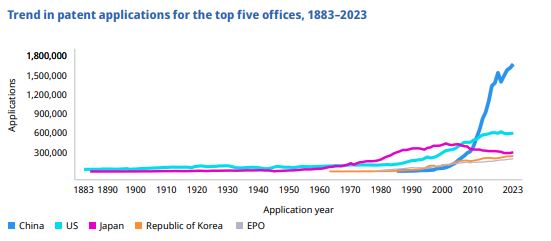
In South Korea, the IP licensing market was valued at USD 15 billion in 2024, with projections reaching USD 23 billion by 2033 (CAGR ~5%).
The IP financing market is also expanding rapidly—from USD 1.9 billion in 2021 to USD 2.2 billion in 2022, with an expected surge to USD 14.5 billion by 2026.
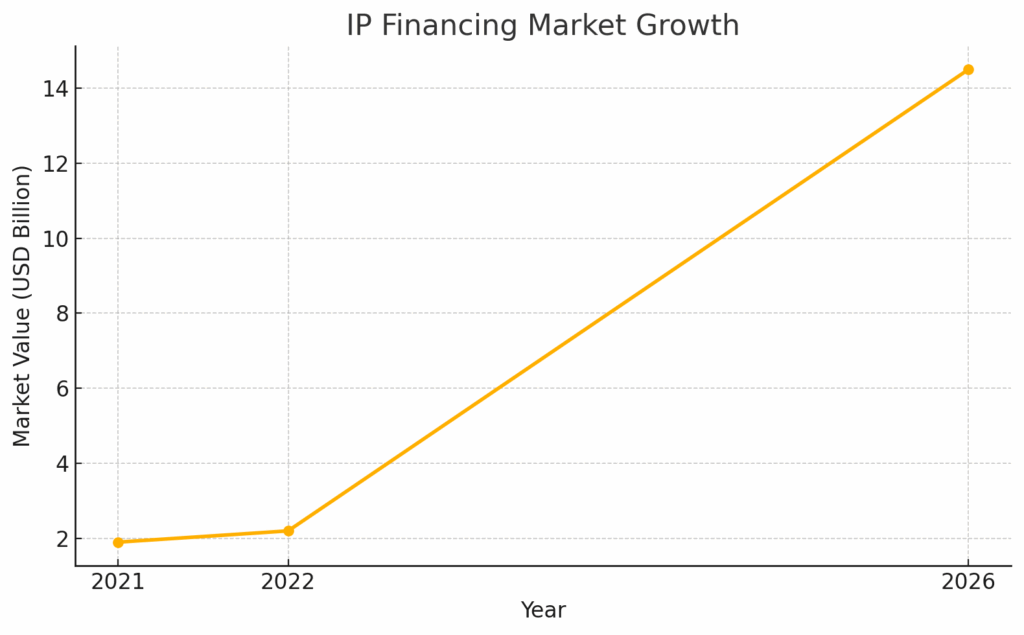
These figures highlight the widening gap between IP creation and its effective monetization, signaling untapped opportunities and a growing imperative to rethink strategy.
Policy Is Pushing, but Readiness Varies
Governments are sending strong signals to encourage commercialization. Japan’s Intellectual Property Strategic Program 2024 outlines a tax reform that will offer a 30% income deduction on patent-derived earnings, effective in 2025.
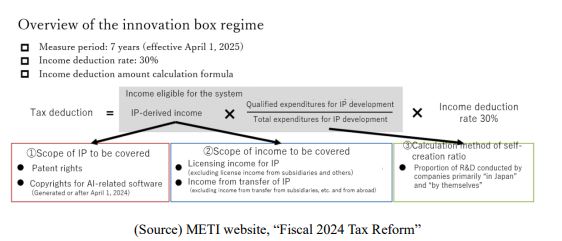
This is part of a broader strategy that includes placing IP experts within R&D teams, building thematic IP portfolios, and expanding ecosystem-level governance. The ambition is clear—but execution remains inconsistent across industries, especially in legacy-heavy sectors.
Domestic Strategies Limit Value Realization
In our review of 50 IP monetization initiatives, we observed that companies focusing on international licensing consistently reported significantly higher returns—often multiples above those confined to domestic markets. Despite this, fewer than one-third of respondents expressed confidence in their ability to navigate the complexities of cross-border deals, such as structuring global partnerships or managing multi-jurisdictional agreements.
This gap highlights a critical truth: many organizations possess high aspirations but lack the integrated frameworks, internal alignment, and global readiness required to capitalize on IP monetization at scale. Without bridging these capability gaps, firms risk leaving substantial value on the table.
4. Closing the Readiness Gap: Strategic Enablers for Monetization Success
Transitioning from intent to outcome requires more than a mandate—it demands orchestration. Leading firms are addressing structural barriers through deliberate, organization-wide strategies that elevate IP from a legal tool to a business asset.
1. Reframe IP as a Business Enabler, Not a Legal Cost Center
The journey begins with narrative transformation. Position IP not as an overhead function but as a commercial growth engine. Whether it's enabling new revenue streams, supporting strategic partnerships, or reinforcing competitive barriers, articulating IP's role in business outcomes secures executive buy-in and budget support.
2. Prioritize Strategic IP Assessments Early in the Process
Many companies rush into licensing discussions without first evaluating which assets truly hold commercial potential. Leading monetization programs invest early in asset-level assessments—analyzing enforceability, market relevance, and technical strength. This intelligence lays the foundation for crafting compelling deal narratives and engaging in informed negotiations.
3. Institutionalize Cross-Functional Monetization Task Forces
Monetization is not a solo act. It requires coordination across legal, strategy, R&D, and finance functions. Formal task forces, with clearly defined roles and KPIs, help break silos and accelerate execution—especially within the hierarchical structures often seen in large Asian corporates.
4. Expand the Geographic and Sectoral Monetization Lens
Many firms limit their focus to domestic licensing opportunities or known industry partners. However, the real value often lies in underexplored sectors or foreign markets. Successful programs take a global view—mapping assets to unmet needs across geographies and industries and pursuing deals that align with broader market trends.
5. Select Strategic Partners, Not Transactional Brokers
Transactional IP service providers may help file patents or support isolated deals, but monetization success requires advisory partners with deep sector insight, global licensing expertise, and the ability to guide multi-jurisdictional negotiations. Strategic collaboration delivers not just transactions—but outcomes.
By embedding these practices, companies can transform their IP functions from cost centers into revenue-generating engines that are fully aligned with their enterprise strategy.
5. Conclusion: Transforming Momentum into Measurable Impact
The monetization dialogue in Asia has entered a new phase. It is no longer confined to innovators or policy circles; it has moved into the C-suite. However, recognition of IP’s potential must be matched by readiness to act—structurally, culturally, and commercially.
Companies that succeed will be those who:
- Diagnose monetizable assets through rigorous, strategic audits
- Design tailored monetization roadmaps that unite technical, legal, and business perspectives
- Execute cross-border deals that reflect both local IP strengths and global market realities
At Evalueserve, we support innovation leaders across Japan, South Korea, and the broader Asia-Pacific region in making this transition—from latent potential to strategic performance.
The demand is apparent. The leadership is engaged. Now, the opportunity lies in execution.
Looking Ahead: Continuing the Monetization Dialogue
This blog is part of our ongoing series exploring how companies can unlock value from intellectual property. You can read our previous blog, Mastering the Art of Licensing | IP and R&D Evalueserve. In the coming weeks, we’ll dive deeper into cross-border deal structuring, valuation frameworks, and real-world success stories from Asia and beyond. Stay tuned.
Talk to One of Our Experts
Get in touch today to find out about how Evalueserve can help you improve your processes, making you better, faster and more efficient.