
Event Highlight
Walking into IPBC Europe, you expect the usual calibration exercise: who’s in the room, what are they actually worried about, and where does the spin end and the signal begin. At this year’s event, a key theme quickly emerged: the European IP deal market is grappling with uncomfortable realities that are changing the way business is done. The conference revealed these shifts directly—even when the agenda did not.
The room tells the real story.
The delegate mix was telling. Corporate stakeholders and deal enablers dominated, while service providers were less present. Licensing and monetization functions outweighed prosecution or portfolio management. The message: this conference is about doing business or positioning to do so. Conversations reinforced this—the main question for transaction partners was, “Can you actually close deals?” not just spot opportunities or devise strategies.
This shift in market demand calls for greater scrutiny: closing deals is now the central benchmark for external partners.
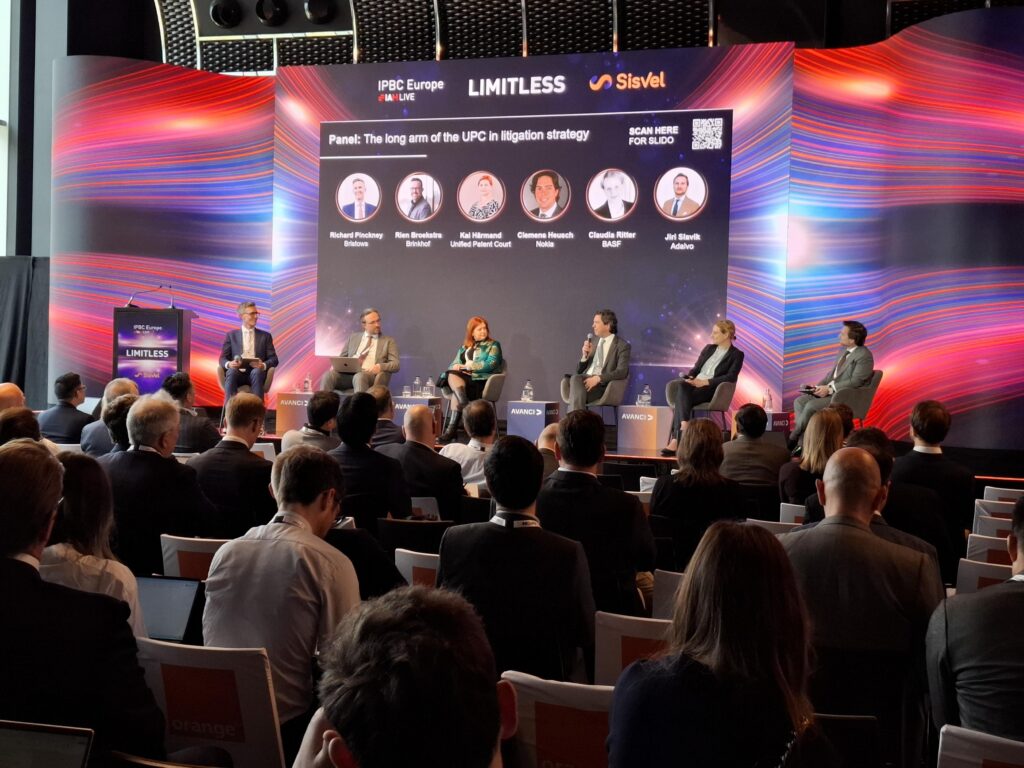
Budget pressure is reshaping the IP function — and not just at the margins.
The most consequential undercurrent at the conference was one nobody put on a slide: IP teams across Europe are losing the internal argument. The challenge of articulating the value of intangible assets to senior leadership is not new, but the consequences are intensifying. When macroeconomic headwinds tighten capital allocation, patent filings, forward-looking research investments, and speculative transactions are often the first casualties. The argument for IP investment increasingly has to be framed around near-term risk mitigation rather than long-term value creation — and that framing constrains the kind of work that genuinely builds competitive advantage.
Some companies still operate on this strategy, in which IP remains a central pillar of long-term value creation.
Two key observations emerge. First, even when external capabilities align with internal needs, increasing C-suite trade-offs are widening the gap between what IP teams prioritize and what ultimately receives approval. Second, a sustained increase in patent filings for SEP, coupled with the necessary operational scaling to support it, reflects a deliberate commitment to treating IP as a core strategic asset—standing in contrast to the broader trend of industry pullback.
Both dynamics deserve close attention.
6G is coming, and the filing race has already started
Telecom players at the conference were noticeably more settled on the 6G direction than they were twelve months ago. That clarity has a practical consequence: expect a meaningful uptick in patent filings in the near term as companies stake out their standard-essential positions ahead of the standards coalescing. For anyone in the patent transaction market, this is a window of opportunity. The portfolios being built now will be the ones traded and licensed in five years.
More broadly, a clear trend is emerging: transaction values are rising while the portfolio sizes included in individual deals are shrinking. The market is moving toward precision — high-value, targeted assets rather than large bulk transfers. This is consistent with a broader maturation of the patent transaction market, but it raises questions about origination: finding the right assets is getting harder, not easier.
Batteries merit separate attention. Software-related patents in energy storage are driving increased deal activity—including licensing, M&A, and sales. This is early-stage, but momentum is clear.

AI in IP: widespread adoption, limited conviction
The AI conversation at IPBC Europe followed a pattern familiar to anyone who has attended a professional conference in the past two years: broad awareness, significant deployment, and a conspicuous lack of confidence in the outputs. Many companiesut the challenge clearly — AI tools are being used across the full IP value chain, from pre-filing through prosecution, portfolio management, and into licensing. Still, human expertise remains the critical variable at every stage where commercial judgment matters. The tools are getting better. The trust is lagging.
The corporate segmentation framework reveals where AI’s limits are most acute: in licensing and deal-making, where trust and human judgment matter most.
The execution gap is the market opportunity.
The core takeaway: there’s a structural execution gap. IP teams are stressed. The unmet need is for partners who deliver transaction speed, not just pre-deal analysis.
The conference confirmed what the data suggested: the European IP market excels at valuing ideas, but lacks professionals who close deals. This gap is the core commercial opportunity, and it was the room’s most consistent message.

Vijay Khatri
Solution Architect, Licensing Services

Justine Testard
Senior Client Director, Europe
Looking Ahead
The signals from IPBC Europe 2026 in Paris point to a market that will reward execution over intent, precision over scale, and commercial judgment over technical capability alone. As pressure on IP teams intensifies and deal complexity increases, the ability to translate assets into transactions will define competitive advantage. The next phase of the IP deal market will not be shaped by who understands value, but by who can consistently realize it.
