
Turning Intellectual Property from Defense to Growth
A Conversation Between Sara Jeon and Vijay Khatri on Licensing, AI, and Evalueserve’s Expanding Role in Korea’s Innovation Ecosystem
Sara Jeon (SJ), Head of Sales, APAC region, Evalueserve IP and R&D:
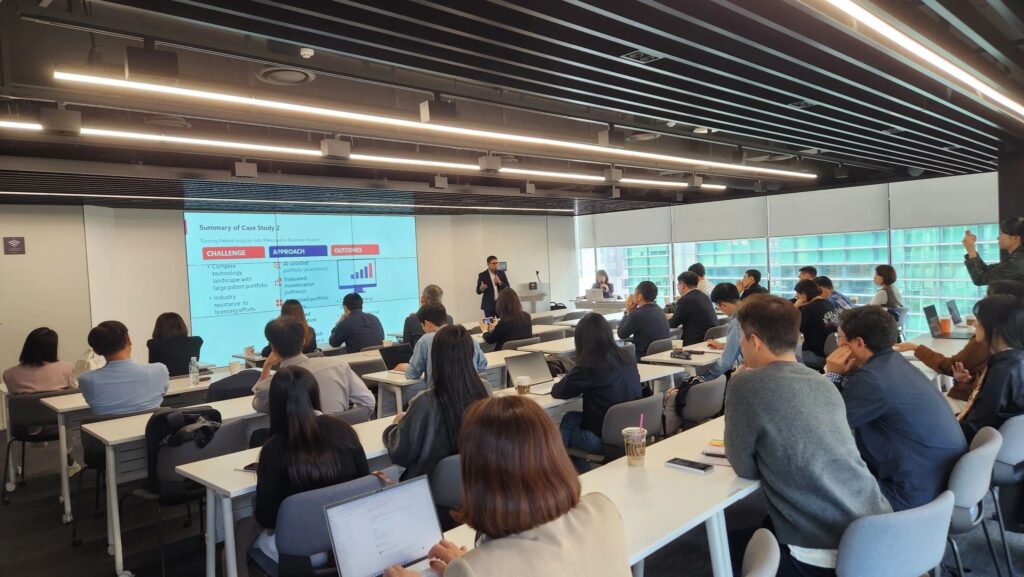
Vijay, thank you for joining me today. The turnout at the IP Monetization Seminar was remarkable — over 50 industry experts gathered to discuss how IP can drive business growth. What brought you to Korea during such a pivotal time for innovation?
Vijay Khatri (VK), Associate Director, London Office, Evalueserve IP and R&D:
Thank you, Sara. It’s a privilege to be here. Korea has always been at the forefront of technological innovation, from semiconductors and electronics to advanced manufacturing. The country’s strong R&D ecosystem makes it a natural hub for forward-looking discussions on how intellectual property can become a genuine growth engine.
This seminar marked an important milestone for us at Evalueserve. We’re strengthening our collaboration with Korean enterprises — helping them not only protect their innovations but also generate measurable business impact from their IP portfolios.
From Protection to Profit
SJ:
You described licensing as an iterative process rather than a one-time transaction. Could you elaborate on what that means for companies?
VK:
Absolutely. Licensing isn’t simply about signing a deal; it’s about continuously identifying opportunities where IP meets market demand. Too often, companies focus on what they invent rather than what the market needs. Actual monetization occurs when those two perspectives align.
At Evalueserve, we support this alignment through our Mind+Machine approach, which combines AI-driven data processing with expert human judgment. This allows us to uncover patterns, assess risks, and design licensing strategies that deliver long-term value rather than short-term gain.
Lessons from Global Innovators
SJ:
You mentioned Nokia and Kodak during your presentation as examples of companies that leveraged IP strategically. What lessons can today’s innovators take from them?
VK:
Both are excellent examples of resilience through intellectual property. Kodak struggled with the shift to digital cameras but remained competitive longer than expected because of its early patents in digital imaging. Nokia, too, faced market disruption but successfully monetized its portfolio through Standard Essential Patents (SEPs), creating a steady revenue stream even after leaving handset production.
These stories show that IP is more than a legal safeguard; it’s a financial and strategic asset that can sustain a company through transformation.
Applying AI with Oversight
SJ:
AI continues to influence nearly every business function. How is it reshaping IP monetization?
VK:
AI has become indispensable for analyzing large patent landscapes, evaluating licensing opportunities, and forecasting value potential. Yet AI should never operate unchecked. While it brings speed and scale, strategic IP decisions still rely on expert interpretation, negotiation, and contextual understanding.
That’s why at Evalueserve, every AI output is validated by specialists. Clients gain both the speed of automation and the assurance of expert review — an essential combination when millions of dollars hinge on each decision.
Exploring the Framework in Depth
SJ:
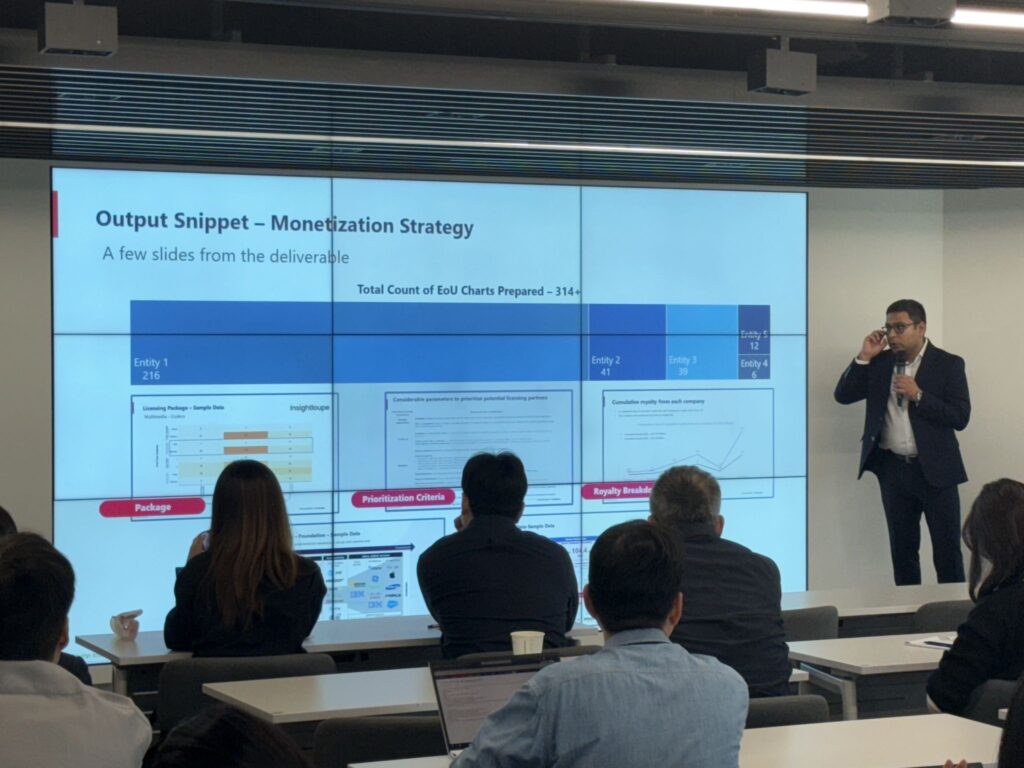
For those who couldn’t attend the seminar, is there a way to explore the licensing framework and examples you shared in more detail?
VK:
Yes, absolutely. We’ve detailed the complete structure, case studies, and actionable guidance in our 2025 Licensing & Monetization Whitepaper. It walks readers through each phase of the Licensing Journey — from portfolio readiness to negotiation and value realization. It’s available for download and serves as a practical guide for executives shaping their future licensing programs.
Strategic Choices in Monetization
SJ:
One of the seminar’s highlights was your discussion on deciding whether to license, partner, or join a patent pool. How can companies make that choice effectively?
VK:
It begins with identifying low-hanging fruit — IP assets that can be monetized quickly. Once these are recognized, companies can evaluate their best route:
- Licensing for immediate revenue.
- Partnerships, when collaboration accelerates innovation.
- Patent pooling when cross-industry cooperation generates shared value.
Each option carries different implications for control, timing, and profitability. The key is to align these decisions with long-term business goals and market maturity.
Patents vs. Trade Secrets in the AI Era
SJ:
In today’s AI-driven world, how should companies decide whether to patent or protect an innovation as a trade secret?
VK:
It depends on two dimensions — cost and confidentiality. Patents are public and can be costly to maintain, but signal ownership and facilitate global commercialization. Trade secrets, meanwhile, are best when an innovation can remain confidential, such as a formula, algorithm, or process.
At Evalueserve, we help clients evaluate these options through strategic foresight, considering market exposure, reverse-engineering risk, and return on investment before choosing the proper protection path.
Empowering Korean Innovators on the Global Stage
SJ:
Many Korean SMEs are eager to expand globally through IP monetization. How can Evalueserve support them?
VK:
Korean innovators are some of the most inventive and agile globally. What they often need is a bridge — insight into international IP frameworks, valuation benchmarks, and licensing models.
Our teams bring local market understanding and global expertise from the US, Europe, and beyond. We help Korean companies uncover monetization opportunities, structure licensing deals, and form partnerships that enhance both revenue and reputation.
The Road Ahead for IP Monetization in Korea
SJ:
Looking ahead, what do you see as the most promising directions for IP monetization in Korea?
VK:
Korea is poised to lead the next era of IP-driven growth, especially in advanced manufacturing, AI applications, and digital technologies. The future belongs to companies that treat IP as a strategic asset rather than a compliance requirement.
Our mission at Evalueserve is to empower that transformation — providing data-backed insights, scalable processes, and collaboration frameworks that convert IP portfolios into engines of innovation and profitability.
SJ:
Thank you, Vijay. This conversation has offered valuable guidance to Korean enterprises as they refine their IP strategies.
VK:
Thank you, Sara. I’m proud of the work we’re doing in Korea and the partnerships that continue to grow from it.

Vijay Khatri
Associate Director, Solutions Architect for Licensing Projects

Sara Jeon
Head Of Sales, APAC region, Sara.Jeon@evalueserve.com
📘 Download the Licensing & Monetization Whitepaper 2025 to explore the complete Licensing Journey, frameworks, and case studies referenced in this discussion.
