
At the recent Deeksharambh induction ceremony for postgraduate students at Jamia Hamdard University’s School of Chemical and Life Sciences (New Delhi), Asish Kumar Patra, Director at Evalueserve, joined as a Guest of Honour to address students embarking on their academic journey.
In this interview, Asish shares his reflections on the event, the importance of staying connected with academia, and the skills students should focus on to succeed in the evolving world of science and consulting.
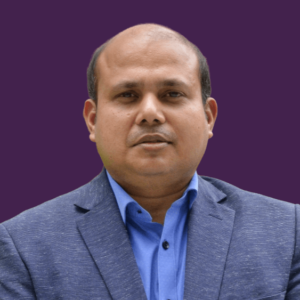
Asish Patra
Head of Toxicology Consulting Practice
Can you tell us about the event and your role there?
I was invited to speak at Deeksharambh, an orientation session that marks the beginning of the academic year for master’s and doctoral students at Jamia Hamdard University’s School of Chemical and Life Sciences.
The session brought together all departments—Biotechnology, Biochemistry, Toxicology, Chemistry, Botany, and Clinical Research. The chief guest attended it, Dr. P. L. Sahu (Director of NDTL), Vice-Chancellor Prof. (Dr.) M. Afshar Alam, Dean Prof. (Dr.) Suhel Parvez and senior faculty members.
My talk aimed to give students a realistic glimpse of how careers in chemical and life sciences are evolving—both in wet lab research and in consulting roles like those at Evalueserve. I focused on the growing influence of artificial intelligence in research, the importance of change management, and how students can prepare for rapid shifts in scientific and industrial practices.

Why do you think it’s essential for industry professionals to stay connected with universities and students?
From my own experience studying at BITS Pilani, I know there’s often a gap between academic learning and professional readiness.
University education provides a strong foundation, but the soft skills, industry context, and real-world applications needed in corporate or research environments are very different.
By interacting with students early on their journey, industry experts can help them understand what’s expected beyond the classroom. It encourages them to start thinking about their long-term development from day one, not just after graduation.
This exchange benefits both sides: students gain direction and confidence, while institutions ensure their graduates are ready for the evolving demands of research and industry.

What hard and soft skills should students focus on developing during their academic years?
The first critical skill is effective communication—both verbal and written. Being able to articulate ideas clearly is key, whether you’re addressing professors, collaborators, or, later, colleagues and management teams.
On the technical side, students should stay curious beyond the textbook. Academic curricula, particularly in scientific fields, can sometimes lag behind cutting-edge research. Topics such as PFAS toxicity, new approaches in toxicology, and other emerging technologies are often missing from standard materials.
Students who proactively explore international research trends, following new findings from global labs, gain a sharper sense of where science is heading and will develop the awareness needed to stay ahead. Combine a firm foundation with curiosity and adaptability, that’s what truly sets you apart.
In short, they should pair strong foundational knowledge with a habit of continuous learning and technological curiosity.

What are the biggest challenges students are likely to face as they enter the workforce or the research industry?
One major challenge is keeping pace with how fast technology, especially AI, is transforming science.
Artificial intelligence is already a crucial partner in research, from predicting drug molecules to accelerating discovery cycles. What once took 6-10 years can now be achieved in two or three.
That’s great for innovation, but it also means competition is increasing and opportunities are evolving. Students who adapt quickly, learn how to integrate AI tools into their research, and can demonstrate fundamental, results-oriented skills will thrive.
Those who rely solely on traditional methods might find it harder to catch up. The key is to view AI not as a threat but as a collaborative partner in one’s learning and work.
Any final thoughts or advice for students starting their academic journey?
Education is only the beginning. The most successful professionals are lifelong learners—people who stay curious, embrace change, and aren’t afraid to ask hard questions.
The world of science and consulting will always reward curiosity, adaptability, and action-oriented thinking.
Jamia Hamdard University – School of Chemical and Life Sciences

